Commercial Roof Insurance Claims
The full claim documentation process, from first roof walk to adjuster meeting.
View scope
Local weather advisory
The National Weather Service has issued a coastal flood advisory covering Jupiter. Heavy rain and drainage loading can expose roof leaks, blocked drains, and ponding water. This is a weather exposure advisory; it does not establish damage to a specific roof.
Do not access a roof during hazardous weather. Protect people first, avoid water near electrical equipment, and request roofing help when conditions permit.
National Weather Service · Updated Oct 23, 2026, 6:25 PM UTC
Insurance Claims
Hurricane season claims move differently than routine roof claims — higher volume, delayed adjuster visits, and more scrutiny on what the storm actually caused.
Hurricane season in South Florida runs June through November, and every commercial roof in Palm Beach County is built and insured with that stretch of the calendar in mind. When a named storm actually crosses the area, the roof claim that follows looks different from a routine wind or leak claim — the volume of claims across the county is higher, adjuster visits get delayed, and carriers apply more scrutiny to what is storm-caused versus what was already wearing out. Commercial Roofers of West Palm Beach documents hurricane roof damage the way a post-storm claim needs to be documented: fast, organized by roof area, and tied to the specific wind and rain event.
We are your roofing contractor, not a public adjuster — we inspect, document, and substantiate the roof damage so you and your adjuster are working from the same accurate scope.
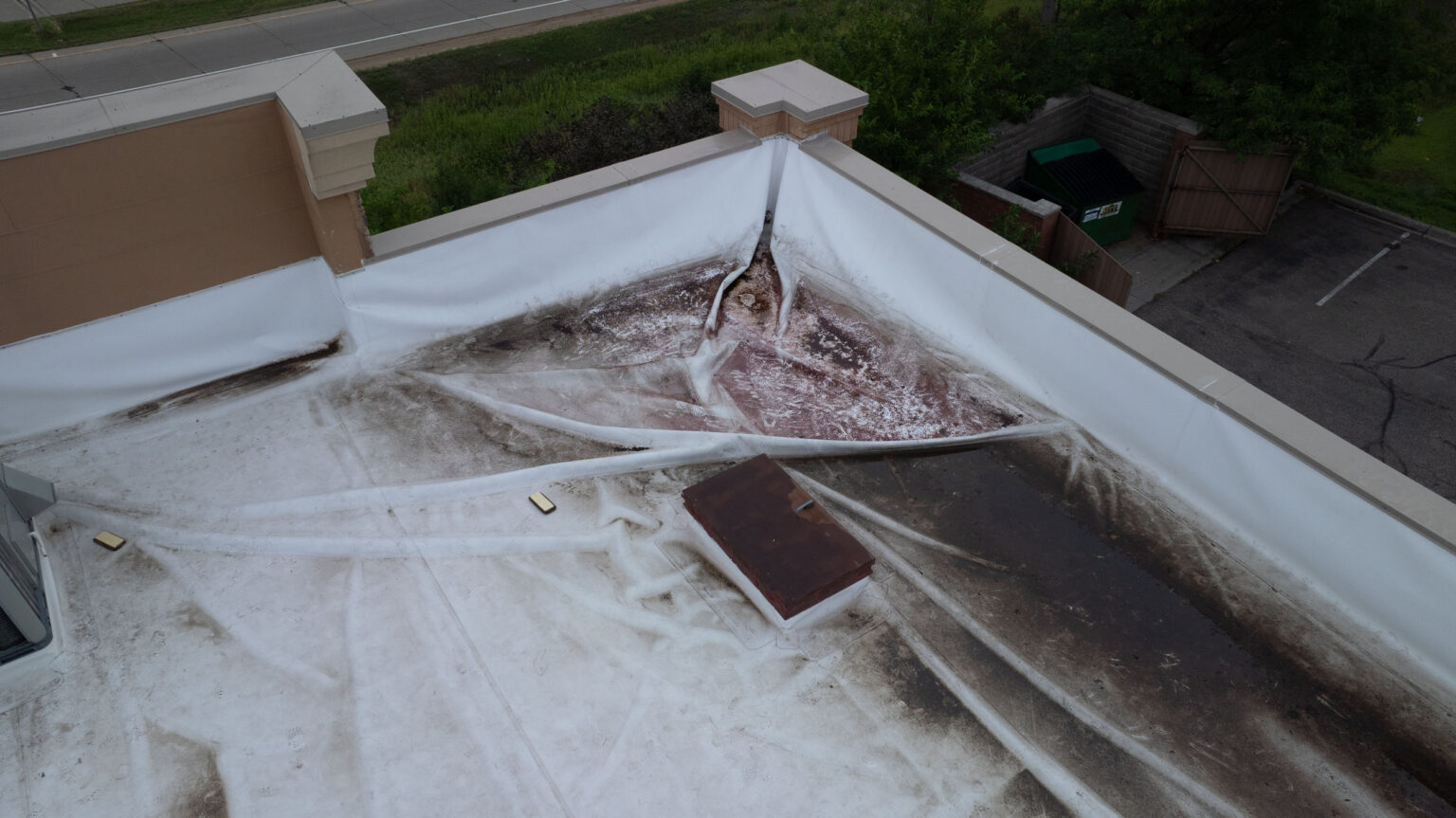
On low-slope membrane roofs — TPO, PVC, modified bitumen, built-up systems — hurricane-force and near-hurricane wind creates uplift at the perimeter and corners first, where fastening patterns are most exposed. That shows up as lifted or torn membrane along parapet edges, displaced or bent coping and edge metal, and in worse cases, membrane peeled back from the field. Rooftop units, vents, and curbs take wind-driven debris impact and can lose their flashing seal, which is often where the interior leak actually starts even when the field membrane looks intact from the ground. On tile roofs, common on some hospitality, religious, and mixed-use buildings in the area, wind can lift and crack tile or strip underlayment, and a few missing tiles can mean far more water intrusion than the visible damage suggests.
Most commercial property policies in Florida carry a separate named-storm or hurricane deductible, distinct from the deductible that applies to other causes of loss, and it is typically calculated as a percentage of the building's insured value rather than a flat dollar figure. That structure makes accurate documentation of the loss even more important, because the roof file has to support the actual repair or replacement cost against a deductible that can be substantial. We build the scope so the carrier and the owner both have a clear, itemized picture of what the storm did and what it will cost to correct.
Roof work triggered by hurricane damage in Palm Beach County has to meet current Florida Building Code wind uplift and product approval requirements, rather than a simple replacement of what was there before. That includes wind uplift-rated fastening patterns and materials carrying valid product approval or Notice of Acceptance documentation, and, in coastal areas that fall inside the state's wind-borne debris region, opening protection and edge securement requirements that go beyond a simple like-for-like patch. When a hurricane claim reaches the point of reroofing a section, the Florida Building Code can also require a secondary water barrier under the new roof covering. We identify which of these code triggers apply to the specific building and roof area before the scope is finalized, so the claim reflects a code-compliant repair, not a repeat of what failed.
After a hurricane moves through Palm Beach County, adjuster availability tightens across the region because every carrier is handling claims from multiple properties at once. We recommend getting the roof documented as soon as it is safe to access, even before the adjuster visit is scheduled, so the file captures the damage close to the event rather than after weeks of additional weather exposure. If the roof is open to water, emergency tarp and dry-in work happens first to stop interior damage, and that work gets documented and folded into the claim file alongside the permanent repair scope.
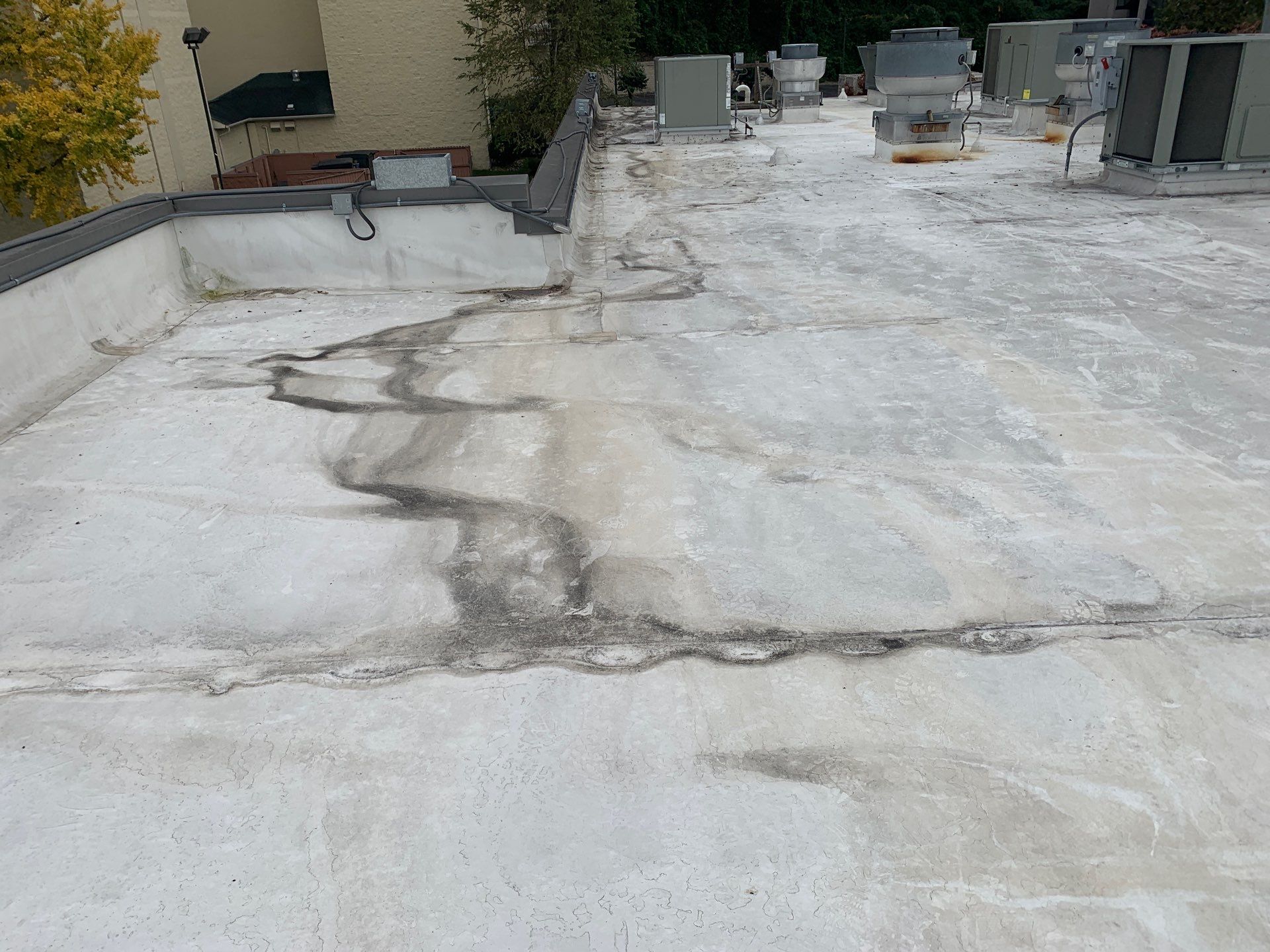
Carriers scrutinize hurricane roof claims for signs that damage predates the storm, particularly on roofs approaching or past their expected service life. Salt-air exposure along the coastal corridor accelerates corrosion on fasteners, edge metal, and rooftop equipment, and a carrier may attempt to attribute failure to that gradual wear rather than the wind event. We document the distinction directly — wind-driven tear patterns, debris impact points, and displacement consistent with the storm's wind direction look different from corrosion or membrane fatigue that built up over years, and we put that difference in writing.
If your building took hurricane damage this season, call Commercial Roofers of West Palm Beach at 561-728-0649 for a documented roof walk.
Most do, subject to the policy's named-storm deductible and the specific cause-of-loss language. A documented roof file helps the carrier evaluate the claim against actual wind and rain damage.
A separate deductible, usually a percentage of the insured value, that applies specifically to hurricane and named-storm losses rather than the standard all-other-perils deductible in the policy.
Repairs and reroofing triggered by storm damage generally have to meet current Florida Building Code wind uplift and product approval requirements for the area, which can mean upgraded fastening or edge securement beyond a like-for-like patch.
As soon as it is safe to access. Adjuster visits are often delayed after a widespread storm, and documenting the roof close to the event helps the file reflect the actual storm damage.
Yes, especially on older roofs or in salt-air-exposed coastal areas. We document wind-driven damage patterns separately from corrosion or fatigue so the distinction is clear in the claim file.
Emergency tarp and dry-in work comes first to stop interior damage. That work is documented and included alongside the permanent repair scope in the claim file.
The full claim documentation process, from first roof walk to adjuster meeting.
View scope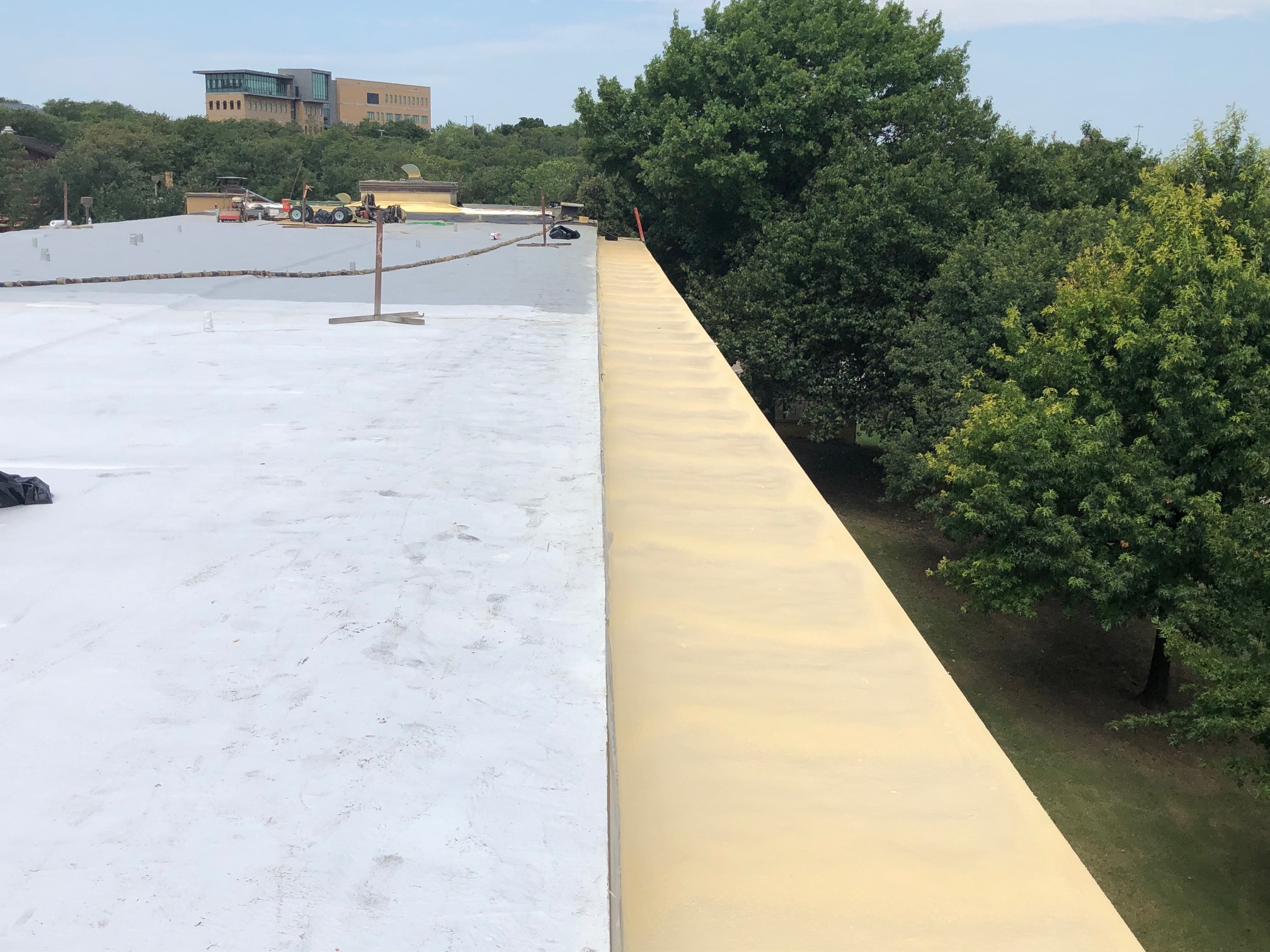
Documentation for wind and severe-thunderstorm roof damage outside named storm events.
View scope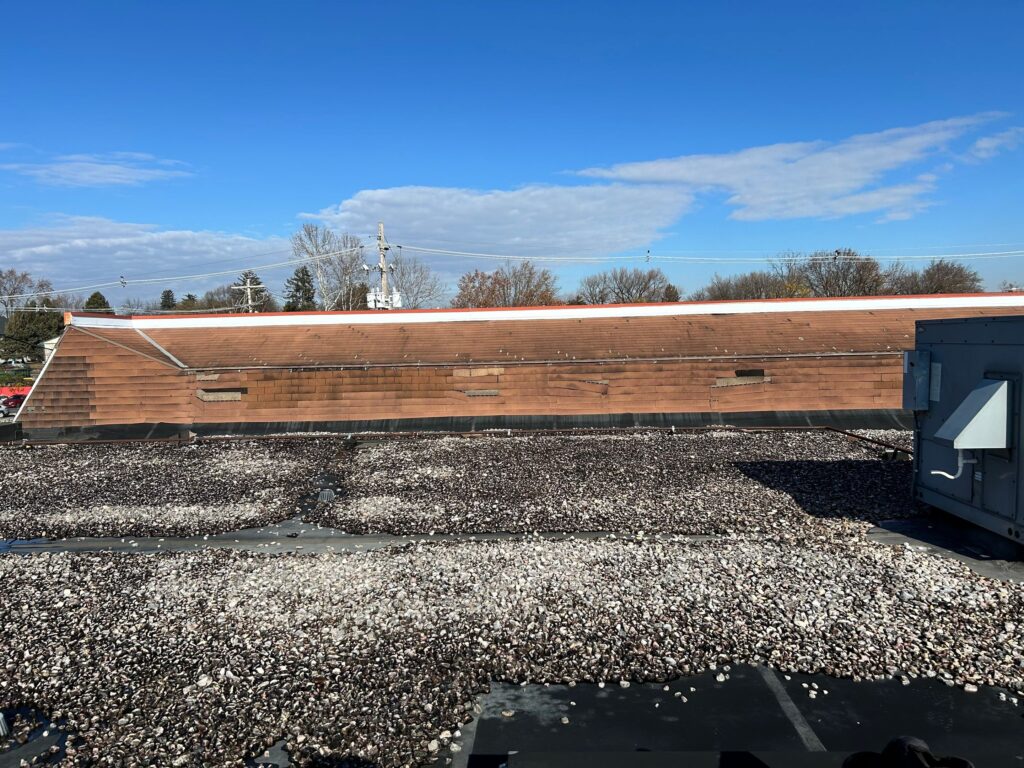
Temporary protection to stop water intrusion immediately after storm damage.
View scope
Repair and replacement scopes for wind and rain damage from named storms.
View scope
Coastal corrosion repair that can complicate hurricane claim documentation if left undocumented.
View scopeShare the building address, the roof concern, and any timing pressure. We will help frame the next roof scope.
Contact Commercial Roofers of West Palm Beach